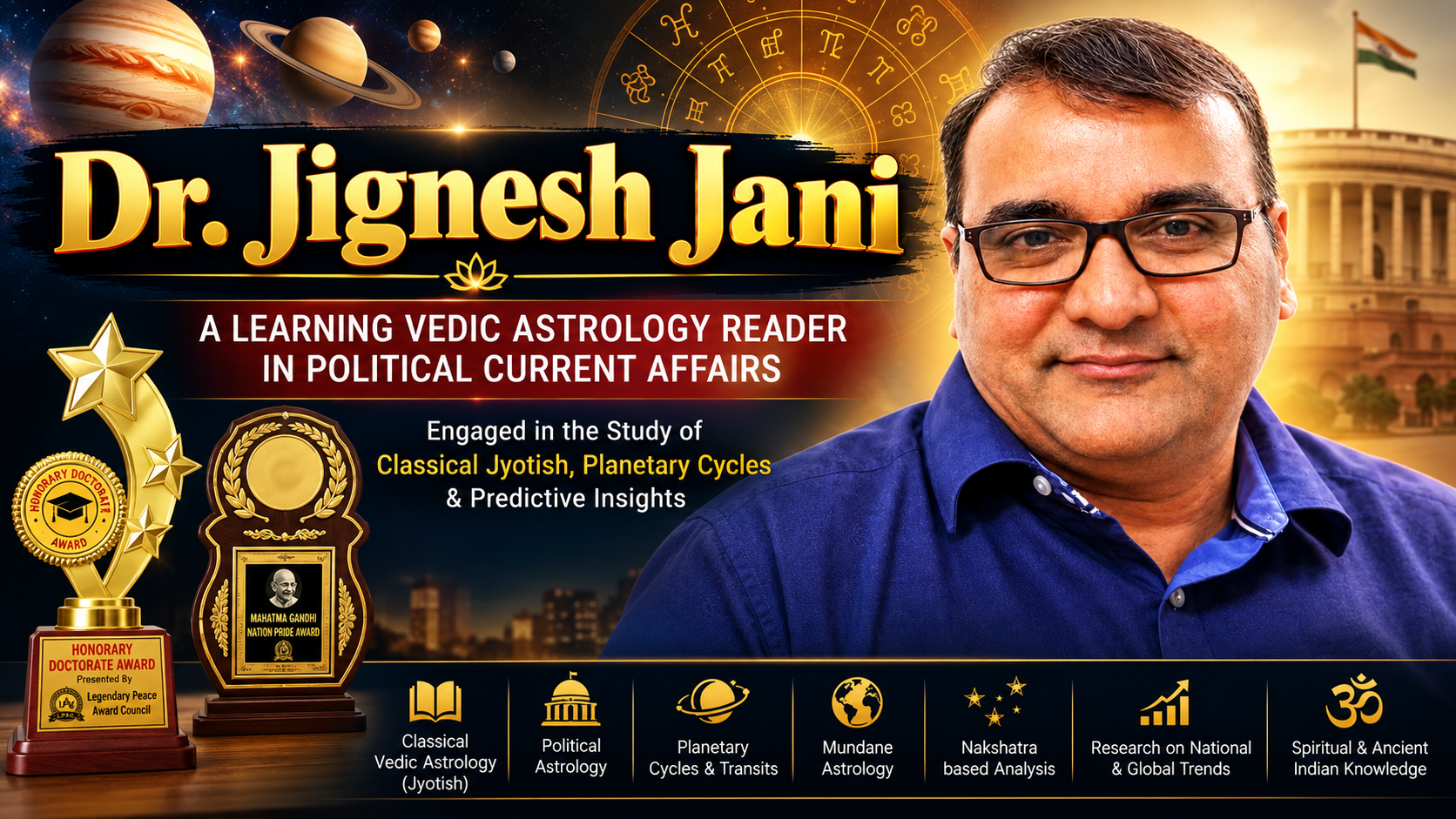
Vedic Astrology Offers Symbolic Insight into International Developments, Says Jignesh Jani
Ahmedabad | July 10, 2026: Vedic astrology researcher Jignesh Jani has shared his perspective on how traditional Jyotish can provide symbolic insights into today’s international developments. According to Jani, planetary movements have been studied for centuries in Vedic astrology as representations of broader collective cycles, offering a philosophical framework for reflection rather than scientifically established predictions of geopolitical events.
Jani explained that the current global environment is marked by shifting alliances, economic uncertainty, regional conflicts, technological competition, and increasing diplomatic engagement. While these developments are driven by political, economic, and strategic factors, he said many Vedic astrologers also study planetary alignments to better understand the symbolic themes associated with such periods of change.
Referring to the current Mars–Rahu conjunction, traditionally known as Angarak Yoga, Jani noted that many practitioners associate this planetary combination with assertive energy, decisive action, strategic planning, and heightened geopolitical activity. He also discussed the Saturn–Neptune alignment, which is commonly interpreted as symbolizing institutional reforms, ideological transitions, and long-term changes in global governance.
According to Jani, Jupiter continues to hold special importance in Vedic astrology as a symbol of wisdom, ethics, justice, education, and diplomacy. Many astrologers believe Jupiter represents opportunities for constructive dialogue, responsible leadership, and peaceful negotiations during challenging times.
While sharing these interpretations, Jani emphasized that astrology should never be used as a substitute for evidence-based geopolitical analysis. He clarified that Vedic astrology does not scientifically predict wars, diplomatic agreements, or political decisions. Instead, it offers symbolic perspectives that encourage thoughtful discussion and personal reflection.
“International developments are influenced by diplomacy, economics, public policy, and the decisions of world leaders,” Jani said. “Astrology may offer symbolic interpretations of broader cycles, but the future will always be determined by human choices and international cooperation.”
Concluding his remarks, Jani encouraged responsible public understanding of astrology by distinguishing traditional beliefs from factual analysis. He expressed hope that global leaders will continue to prioritize dialogue, mutual respect, and peaceful cooperation, helping nations address complex challenges while promoting long-term stability and international harmony.