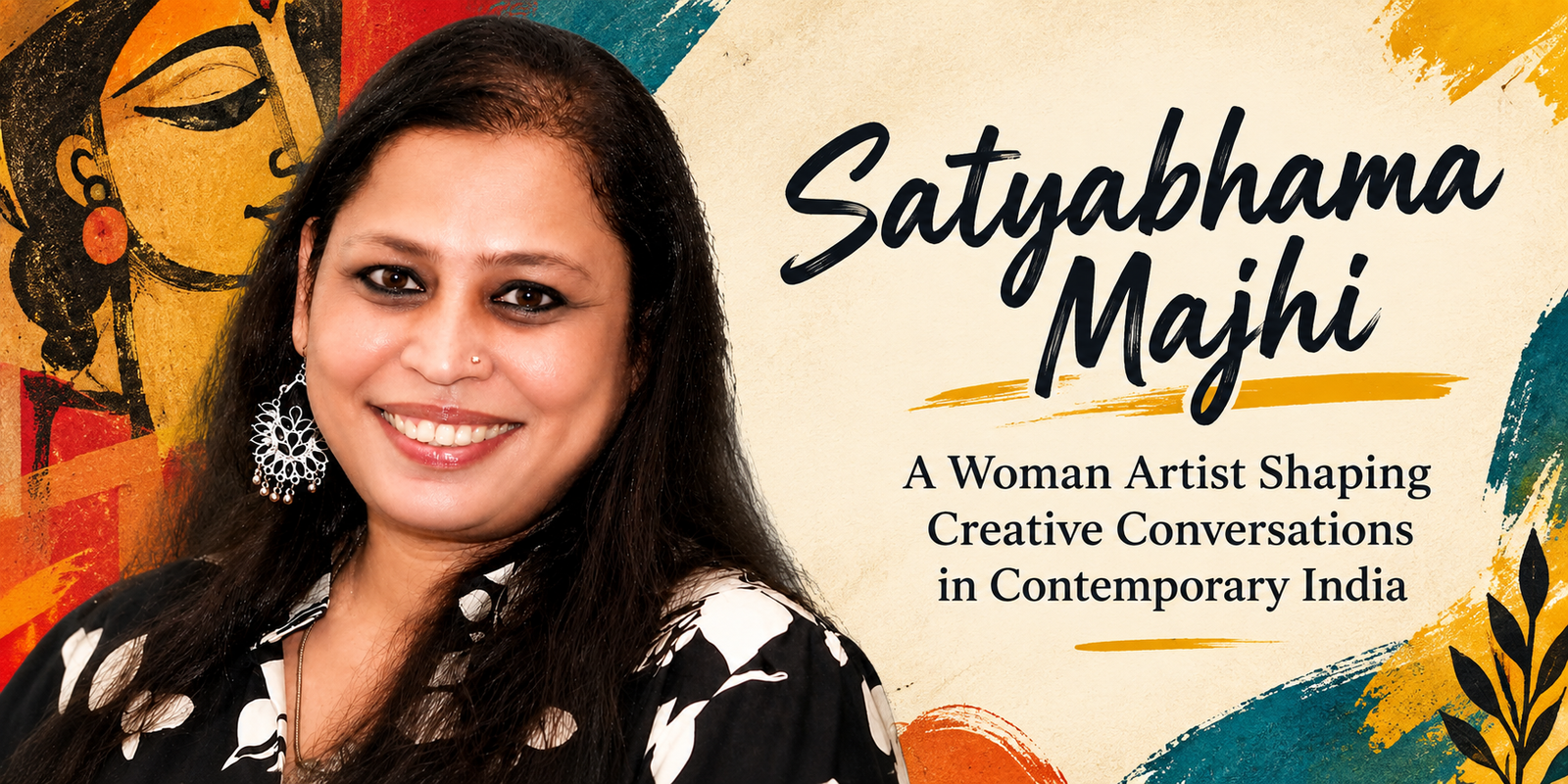
Satyabhama Majhi: Art, Ecology and the Human Connection With Nature
The relationship between human beings and the natural environment has become one of the important subjects of contemporary art. As cities expand, landscapes change and traditional relationships with nature evolve, artists are increasingly exploring how people understand and respond to their surroundings.
For contemporary Indian artist Satyabhama Majhi, ecology is closely connected with culture, community, memory and artistic practice. Her work explores not only the appearance of natural landscapes but also the relationships that people develop with them.
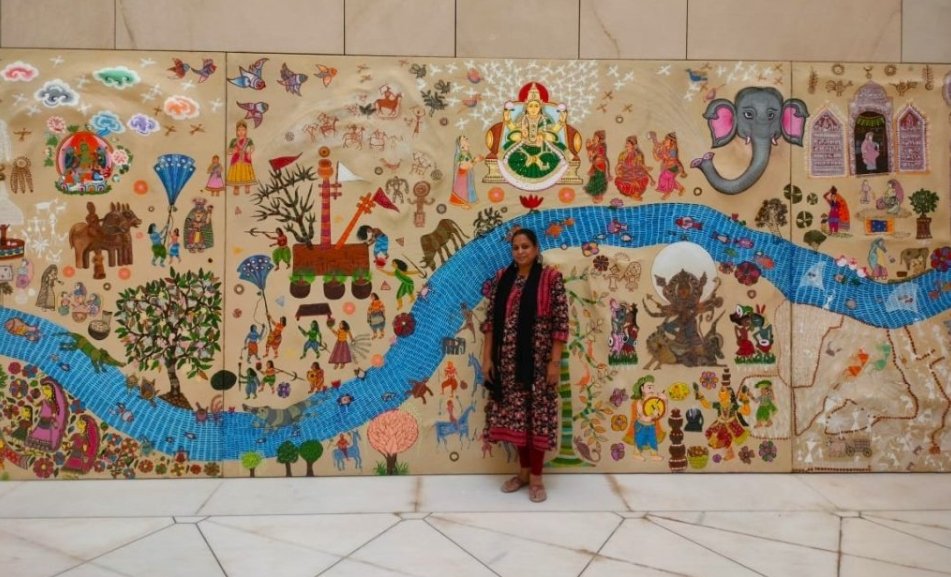
Based in Bhubaneswar, Odisha, Majhi works across painting, sculpture, installation, photography, mixed media, public art and community-based practice. Her long-term engagement with the Niyamgiri region and the Dongaria Kondh community has played an important role in shaping her understanding of the connections between environment and culture.
Nature as More Than a Landscape
In conventional landscape painting, nature is often presented as scenery.
Mountains, forests, rivers and fields may become subjects because of their beauty.
Majhi’s approach goes further.
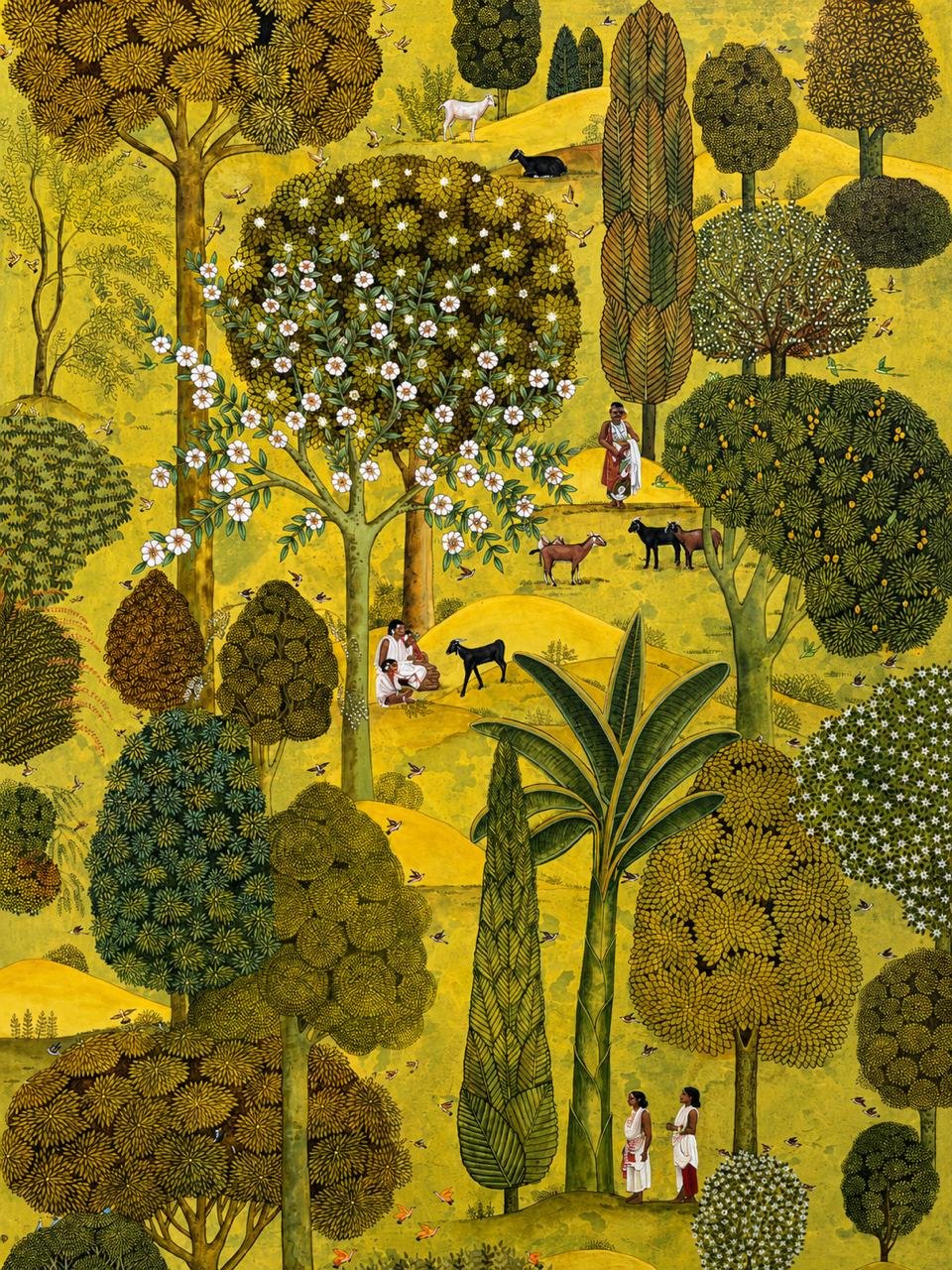
Her engagement with natural environments considers how landscapes are connected with human life. A mountain can represent cultural identity. A forest can be connected with livelihood. Soil can become an artistic material. A natural pigment can carry a relationship with place.
This approach changes the meaning of ecological art.
Nature is not simply something to be represented. It becomes part of a larger cultural and social story.
Niyamgiri and Ecological Awareness
The Niyamgiri landscape has been an important source of artistic exploration for Majhi.
Her sustained engagement with the Dongaria Kondh community has allowed her to observe relationships between people, land, livelihood and cultural traditions.
The region demonstrates how closely human life can be connected with the natural environment.
Mountains, forests and other natural resources can influence everyday activities and cultural practices.
For an artist, understanding these relationships requires more than looking at the landscape.
It requires listening and observation.
Majhi’s long-term engagement provides a foundation for her artistic interpretation of this environment.
The Mountain as Cultural Geography
The Niyamgiri hills appear in Majhi’s artistic vocabulary through recurring geometric forms.
The triangular motif, influenced by visual traditions associated with the Dongaria Kondh community, can evoke the silhouette of the mountains.
The triangle therefore carries multiple meanings.
It can represent the physical landscape while also suggesting stability, sacred geography and cultural identity.
This transformation of landscape into geometry demonstrates how ecological experience can become an element of contemporary visual language.
People and Their Environment
Environmental relationships are rarely purely ecological.
They are also social and cultural.
People depend on environments for food, water, agriculture, materials and livelihood. Communities may develop traditions around particular landscapes and natural resources.
Majhi’s practice recognises these connections.
Her interest in indigenous knowledge provides an opportunity to consider how communities understand their surroundings through lived experience.
The environment becomes part of cultural knowledge.
Natural Materials in Art
Majhi’s use of natural pigments creates a direct material relationship between artwork and environment.
Materials such as chalk stone, charcoal, turmeric, geru soil and brown stone can be processed into pigments with appropriate binders.
These materials come from the natural world and bring their own physical qualities into the artistic process.
Colour therefore becomes connected with material history.
The pigment is not simply a colour selected for aesthetic reasons. It also has an origin in nature.
The Material Life of Colour
Natural pigments can behave differently from commercially produced colours.
Their textures, tones and intensity may vary according to the material and preparation process.
This creates an element of experimentation.
For Majhi, working with such materials can connect artistic practice with traditional forms of knowledge while also opening possibilities for contemporary experimentation.
The artwork becomes a meeting point between material, environment and imagination.
Ecology and Cultural Memory
Nature can also function as a carrier of memory.
People may remember particular places through landscapes.
A mountain can be associated with childhood experiences, cultural traditions or community histories. A particular soil colour can remind people of a region. A plant may be connected with food, medicine or ritual.
When landscapes change, these memories can also be affected.
Majhi’s interest in cultural memory therefore intersects naturally with her ecological concerns.
The preservation of environmental relationships can also contribute to the preservation of cultural knowledge.
Traditional Knowledge and the Environment
Traditional knowledge often develops through long interaction with the environment.
Communities learn how to use materials, recognise seasonal changes, cultivate land and respond to local ecological conditions.
Such knowledge may not always be recorded in formal written systems.
It can be transmitted through practice and experience.
Majhi’s artistic engagement with traditional and indigenous cultural environments has encouraged attention to these forms of knowledge.
Her work provides a contemporary artistic context in which such relationships can be considered.
Art and Environmental Change
Contemporary societies are experiencing rapid environmental and social change.
Urban expansion, infrastructure development and changing lifestyles can alter people’s relationships with natural environments.
For artists, these changes create important questions.
How should changing landscapes be remembered?
What happens to cultural practices when environments change?
How can contemporary art communicate the relationship between people and nature?
Majhi’s practice approaches these questions through visual exploration rather than through simple statements.
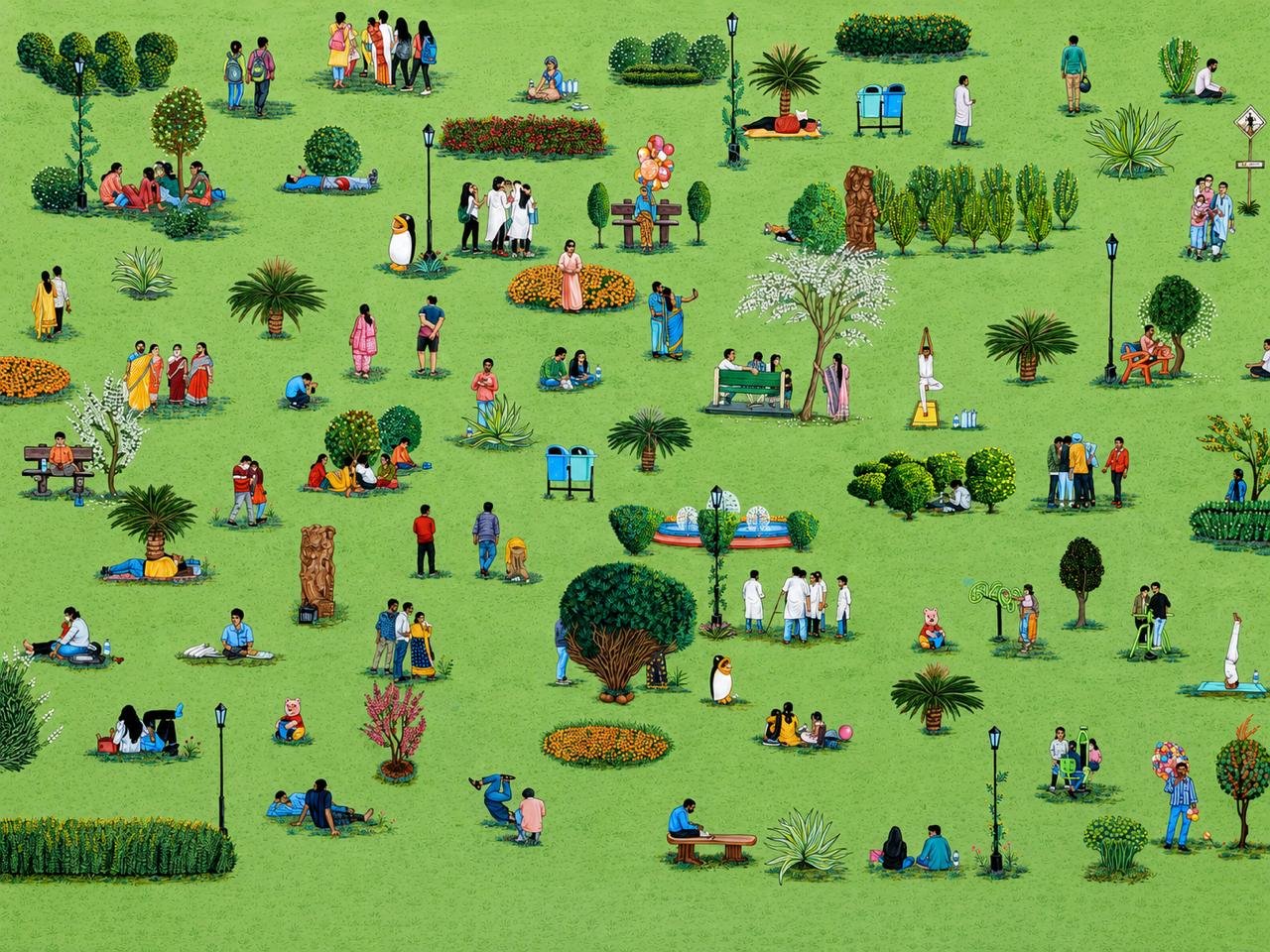
The Urban Environment
Ecological concerns are not limited to forests and rural landscapes.
Cities are also ecosystems.
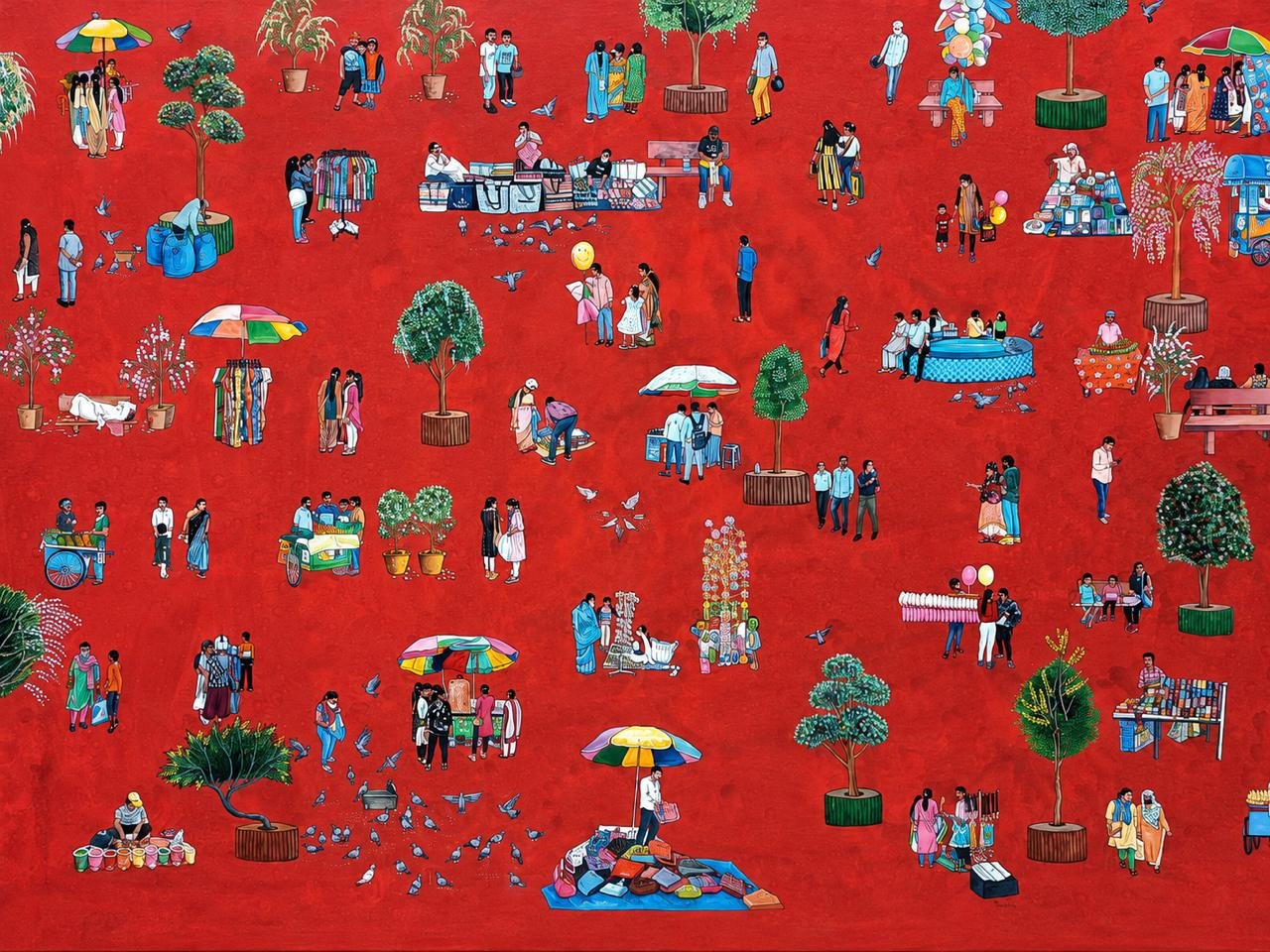
Urban development affects trees, public spaces, water systems, architecture and patterns of human movement.
Majhi’s interest in urban life therefore complements her engagement with rural and indigenous environments.
Her work allows audiences to consider environmental relationships across different settings.
The city and the forest may appear very different, but both are environments shaped by human activity and cultural experience.
Art in Public Spaces
Public art provides another way of connecting ecological ideas with everyday life.
Murals and installations in public environments can encourage people to notice their surroundings differently.
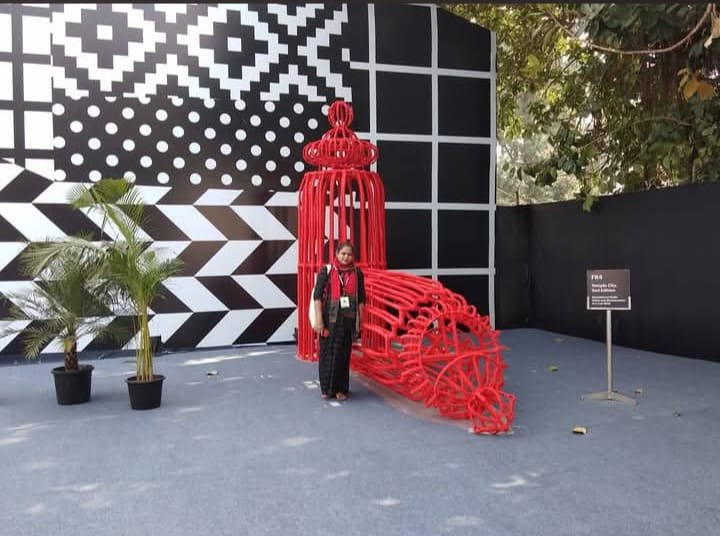
Majhi’s involvement in public-art initiatives in Odisha demonstrates how artistic expression can become part of shared urban spaces.
Public art can introduce visual references to nature, culture and community into places that people encounter every day.
This makes ecological and cultural themes accessible beyond conventional gallery audiences.
Children and Environmental Awareness
Art education can also create awareness of the natural environment.
Majhi’s long-term work with children encourages them to observe the world around them.
Trees, animals, landscapes and everyday surroundings can become subjects for drawings and creative activities.
This simple act of observation can be meaningful.
Children begin to recognise details in their environment and understand that the natural world can be a source of creativity.
Art can therefore become an early form of environmental awareness.
The “Up and Down” Experience
Majhi’s work inspired by life in Niyamgiri includes the idea of movement between uphill and downhill environments.
The daily movement of people through the hills, connected with activities and livelihood, became an artistic reflection on human movement and changing circumstances.
The idea can also be understood metaphorically.
Life itself involves movement, adaptation and changing conditions.
By transforming an everyday physical experience into an artistic concept, Majhi demonstrates how ecological environments can influence philosophical ideas about human life.
Avoiding the Exotic View
Representing indigenous communities in contemporary art carries responsibilities.
There is a risk that communities may be portrayed only as exotic subjects, separated from the complexity of everyday life.
Majhi’s sustained engagement with the Dongaria Kondh community allows for a different approach.
Her interest includes livelihood patterns, cultural practices, environmental relationships and visual traditions.
This broader perspective recognises communities as living societies rather than simply aesthetic subjects.
Ecology as a Human Question
Environmental concerns ultimately affect people.
Changes in land, resources and ecosystems can influence livelihoods, cultural practices and community identity.
This is why ecological art can also be social art.
Majhi’s practice connects these dimensions.
Her work demonstrates that discussions about nature can include questions about memory, culture, identity and community.
Art and Sustainable Thinking
The exploration of natural materials also encourages artists and audiences to think about material consumption.
Where do artistic materials come from?
How are they produced?
What relationship do they have with the environment?
Such questions can become part of artistic practice.
Majhi’s natural-pigment exploration does not reduce environmental issues to a single solution, but it encourages greater attention to the material origins of art.
A Dialogue Between Nature and Culture
One of the defining characteristics of Majhi’s ecological perspective is the refusal to separate nature from culture.
The two are interconnected.
Land influences communities.
Communities develop traditions around land.
Traditions influence artistic expression.
Art can then reinterpret those relationships for contemporary audiences.
This creates a continuous cycle between environment, culture and creativity.
The Contemporary Relevance of Ecological Art
Ecological questions are increasingly relevant to contemporary societies.
As people experience rapid environmental change, artists can provide alternative ways of thinking about their surroundings.
Art does not always need to provide scientific explanations.
It can create emotional and cultural connections.
A painting, installation or public artwork can encourage viewers to look at familiar environments differently.
Majhi’s work contributes to this reflective dimension of contemporary art.
Connecting Local Ecology With Wider Conversations
Although many of Majhi’s ecological references are rooted in Odisha, the questions they raise are much broader.
The relationship between people and nature is relevant across India and around the world.
Every community develops ways of understanding its environment.
Every landscape carries cultural memories.
Every period of environmental change raises questions about continuity and adaptation.
By beginning with particular places and communities, Majhi’s practice opens the possibility of wider conversations about ecological and cultural relationships.
Conclusion
Satyabhama Majhi’s artistic engagement with ecology demonstrates that the relationship between people and nature can be explored through many forms of contemporary art.
Her connection with Niyamgiri, engagement with the Dongaria Kondh community, use of natural pigments, interest in cultural memory and participation in public art all contribute to a practice in which environment and human experience remain closely connected.
Her work reminds audiences that landscapes are not empty scenery.
They can be sources of livelihood, memory, cultural identity, traditional knowledge and artistic inspiration.
By bringing these relationships into contemporary visual practice, Majhi creates a dialogue between nature and culture.
Her artistic journey ultimately suggests that ecological awareness begins with attention—attention to landscapes, materials, communities and the ways human life is connected to the environment.
Through this perspective, Satyabhama Majhi’s art becomes not only an exploration of visual form but also an invitation to reconsider the living relationship between people and the world around them.